Solar Panel Installation in West Sussex & the South East
NICEIC approved, MCS-compliant solar PV systems designed for your property. From survey to commissioning in around 10 working days. Residential systems from £5,000 – £20,000.
Who is solar right for?
Solar works best when your property uses energy during daylight hours. Here's how different property types benefit.
Residential Solar
Ideal for homeowners with daytime usage of 3,500–6,000 kWh/year. South or SE/SW facing roofs at 30–40° pitch deliver the best results. Expect 50–70% self-consumption without a battery, or 70–90% with one.
Commercial Solar
Best for businesses with daytime operational hours and 20,000+ kWh/year usage. Warehouses, offices and retail units with large roof areas can achieve 70–95%+ self-consumption and significant cost savings.
Social Housing & Public Sector
We work with local authorities and housing associations to design communal solar systems that cover shared loads and reduce tenant energy costs. Medium-to-large blocks with steady daytime baseloads perform best.
Quick suitability check
- Roof faces south, SE or SW (east/west also viable)
- Pitch between 25–40° (flat roofs need tilt frames)
- No shading between 10am and 2pm
- Sound roof structure (avoid asbestos or fragile roofs)
- Daytime energy usage above 60%
- Annual usage 3,500+ kWh (residential) or 20,000+ kWh (commercial)
Our installation process
From first contact to commissioning in around 10 working days. Here is exactly what happens.
Free consultation & site survey
We visit your property, assess your roof, orientation, shading and electrical supply. We review your energy bills and discuss your goals.
Custom system design
We design a system matched to your usage patterns, roof layout and budget. We recommend the right panel count, inverter type and battery size.
Detailed proposal & quote
You receive a clear, itemised quote with estimated savings, payback period and system specifications. No hidden costs.
Installation (1–2 days residential)
Our NICEIC approved engineers install your system. Residential installs typically take 1–2 days. Commercial projects vary by size.
Commissioning & handover
We test everything, register your system, set up monitoring and walk you through how it all works. Full documentation provided.
Payment terms: 25% deposit, 40% one week before installation, balance on completion. See full cost breakdown →
Certified SolVe Solar Roof Mount Installers
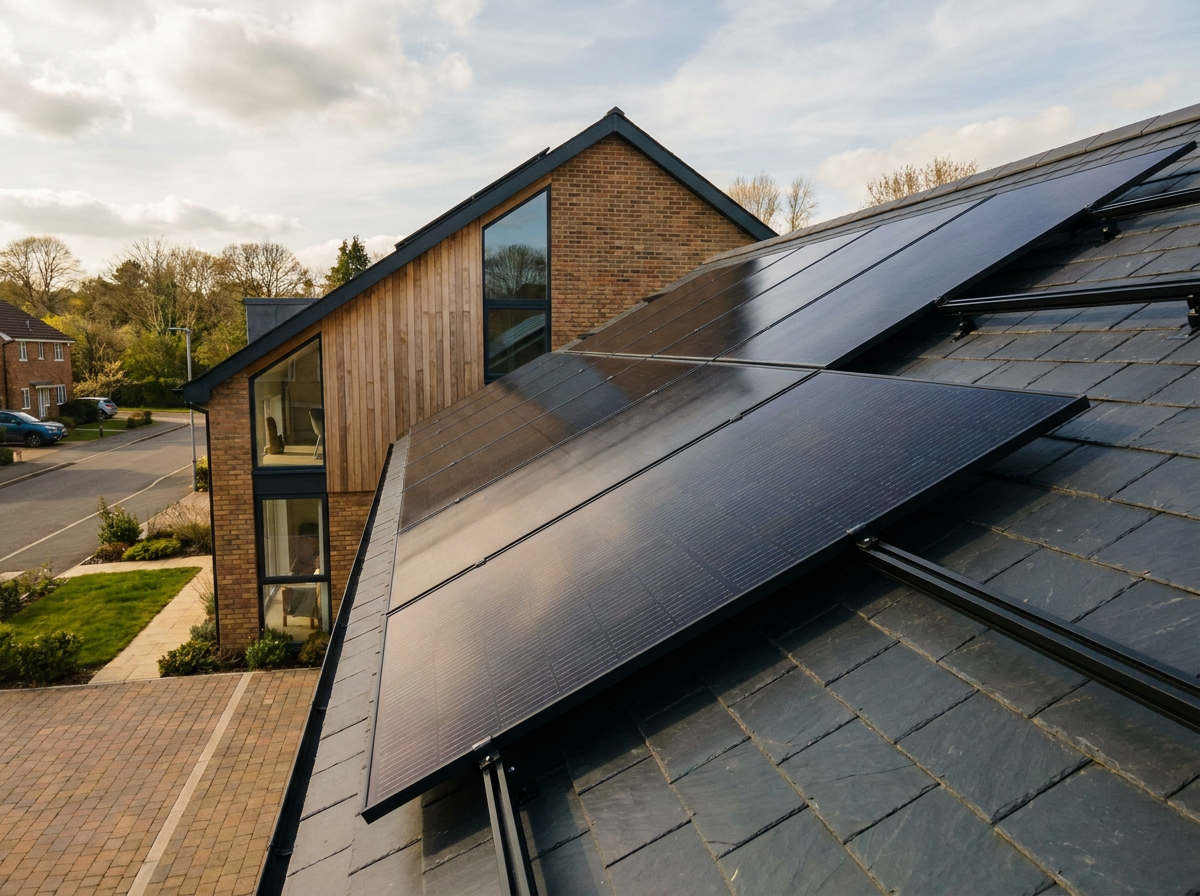
Omni3 is a certified installer of the SolVe solar roof mounting system, a UK-manufactured mounting solution designed to provide a secure, reliable and consistent way to install solar PV panels on suitable roof coverings.
The mounting system is a critical part of any solar installation. It secures the panels to the roof and helps protect the building fabric over the long term. By using a certified mounting system and trained installers, we can deliver solar installations that are not only efficient, but also installed with long-term roof integrity in mind.
The SolVe mounting system is particularly suited to slate and other discontinuous roof coverings, using a professional fixing method designed to reduce the risk of roof damage or water ingress.
- Certified SolVe mounting system installer
- UK-manufactured solar roof mounting solution
- Suitable for slate and other discontinuous roof coverings
- Professional fixing method designed to protect roof integrity
- 20-year manufacturer guarantee/warranty on the mounting system
- Installed as part of a professionally designed solar PV system
As part of our solar survey, Omni3 assesses the roof type, fixing method and installation requirements to ensure the panels are mounted safely, neatly and in line with the correct installation process.
What affects the cost of solar panel installation?
Every property is different. Here are the main factors that influence your quote.
System size (kWp)
A typical home needs 4–6 kWp. Larger properties or higher usage may need more. Commercial systems are sized to match your load profile.
Panel type & brand
We use high-efficiency monocrystalline panels. Premium panels cost more upfront but generate more energy per square metre over their 25+ year lifespan.
Inverter choice
String inverters suit unshaded roofs. Microinverters or optimisers are recommended for roofs with partial shading — they cost more but recover lost output.
Battery storage
Adding a battery from EcoFlow, Sigenergy or SolaX increases the upfront cost but can dramatically improve self-consumption and savings, especially when paired with a smart time-of-use tariff.
Roof type & access
Pitched tile roofs are the most straightforward. Standing seam metal is also ideal. Flat roofs need tilt frames. Difficult access or scaffolding requirements add cost.
Electrical upgrades
Some properties need consumer unit upgrades, earthing improvements or additional cabling. We identify this during the survey so there are no surprises.
Omni3 designs solar PV systems with battery storage in mind from the start. We specialise in EcoFlow, Sigenergy and SolaX battery platforms, allowing us to match the right system to your property, tariff and future plans.
Residential systems: £5,000 – £20,000 | Commercial: ~£60,000
Exact pricing depends on your property. We provide a detailed, itemised quote after your free survey.
Read our full solar installation cost guide →5 common mistakes to avoid
We see these regularly. Knowing what to watch for saves you money and frustration.
Choosing the cheapest quote
Low prices often mean cut corners — poor panel mounting, inadequate earthing, missing documentation or no aftercare. A properly designed and installed system pays for itself many times over.
Ignoring shading
Even partial shading from a chimney, tree or neighbouring building can reduce output by 20–40%. We use optimisers or microinverters where needed and always assess shading during the survey.
Oversizing without understanding usage
A bigger system is not always better. If you export most of your generation because you are out during the day, the payback is much longer. We match system size to your actual usage patterns.
Skipping battery storage
Without a battery, you only use solar energy while the sun is shining. A battery lets you store daytime generation and cheap overnight grid energy for peak evening use — when electricity costs the most.
Not checking MCS compliance
MCS certification is required for Smart Export Guarantee (SEG) payments. We ensure every installation is MCS-compliant through our registered partner arrangement.
Solar installation FAQ
Make the Most of Your Solar Installation
Solar panels are the starting point. Combine them with battery storage, smart monitoring and long-term protection to get the full Omni3 experience.
Omni3 Smart Energy System™
Bring solar, battery storage, EV charging and smart monitoring together into one seamlessly managed energy solution — designed and installed by a single accredited team.
Omni3 Energy Shield™
Long-term protection and ongoing support for your installation — insurance-backed guarantees, full documentation, priority support and annual health checks.
Ready to get started?
Use our free configurator to design your system online, or book a no-obligation site survey. We will assess your property, explain your options honestly and provide a fixed-price proposal.