
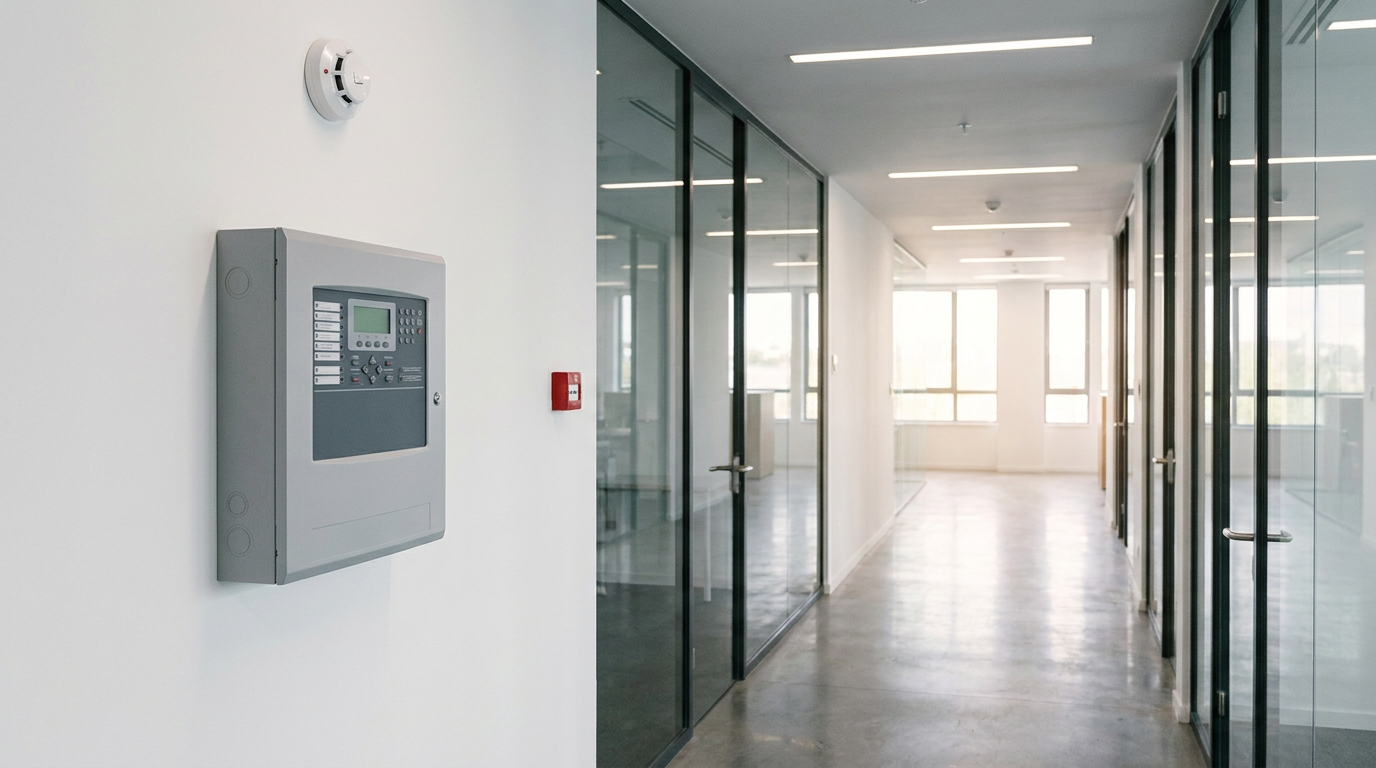
“Fire alarm testing” can mean several different things. Mixing them up is a common cause of gaps in maintenance.
Routine user checks
These are short checks carried out by someone at the premises, usually weekly. A typical check involves operating one manual call point to confirm that the control panel responds and the alarm sounds, then recording it in the log book. The call point used is normally rotated so that different ones are tested over time. Staff need to know who is doing it, how to warn the building beforehand, and what to do if it does not work. If the system is connected to a remote alarm receiving centre, the centre should be told before the test so it does not treat the signal as a real fire.
It confirms basic operation. It does not tell you whether every detector is working, whether batteries are healthy or whether the building has changed in a way that affects detection.
Professional servicing
A service visit is a planned inspection and test by a competent engineer. It normally includes reviewing the log book and fault history, checking the control panel and standby batteries, testing a proportion of devices so that all are covered over the period, checking audibility and any links to other systems, and recording defects and recommendations. For non-domestic premises, BS 5839-1:2025 recommends servicing at intervals of approximately six months, and also covers the records to be kept.
Commissioning
Commissioning is the one-off testing and verification when a system is new or significantly altered. It is not the same as a service. See fire alarm commissioning explained.
Why one does not replace another
- Routine checks do not replace servicing, because they do not test the whole system.
- Servicing does not replace routine checks, because it happens only periodically.
- Neither replaces commissioning after significant changes.
How often?
The standard's recommendation for non-domestic systems is a visit about every six months. The arrangement for a particular building also depends on the system, its design, the fire risk assessment and any insurer or licensing requirements, so it should be agreed and recorded for that building.
If you need servicing, see fire alarm servicing and maintenance.
Related service: Fire Alarm Servicing & Maintenance