
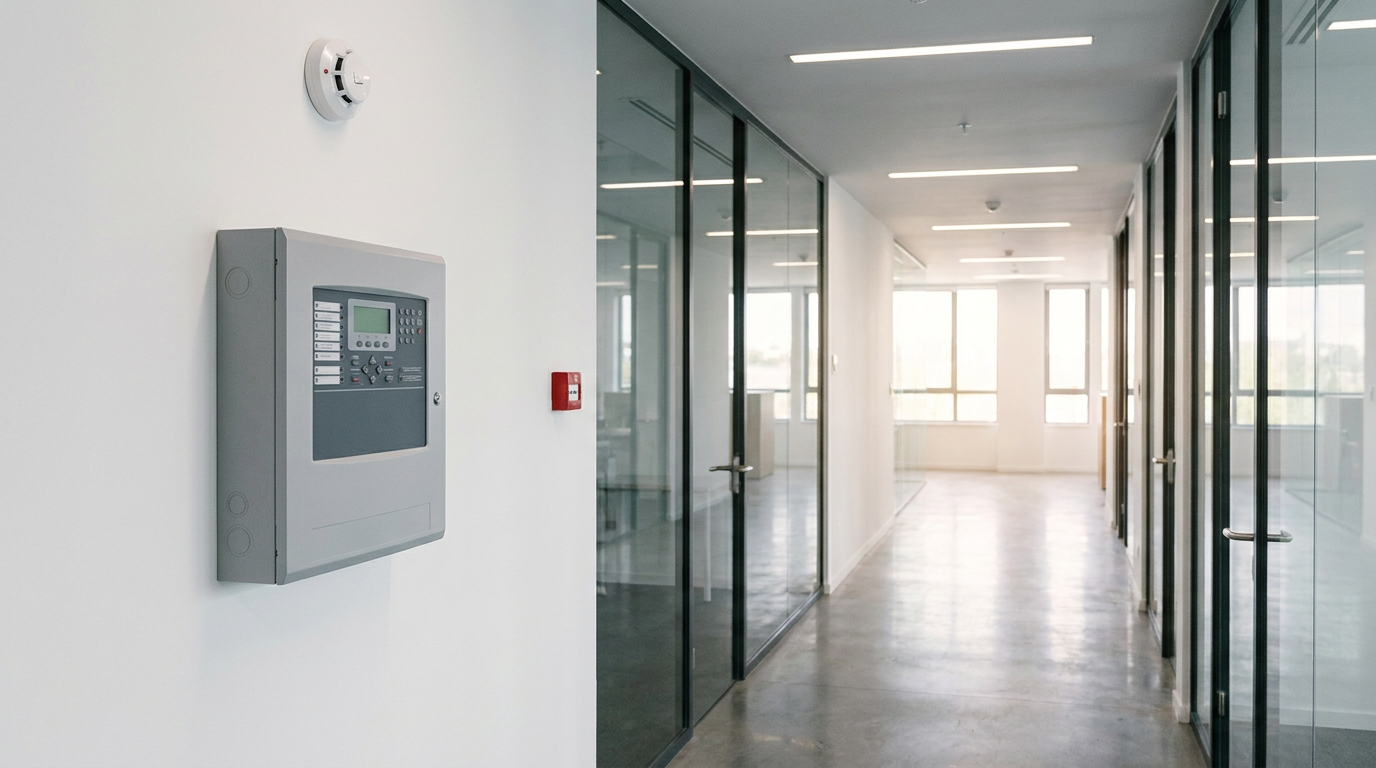
Commissioning is often misunderstood. It is not the same as installation, and it is not the same as a routine test. It is the one-off process that turns a collection of installed equipment into a system you can rely on.
What commissioning covers
- Programming the control panel, including device and zone descriptions
- Testing each detector, manual call point and sounder
- Checking the cause-and-effect programming: what happens when each device operates
- Checking that the alarm is audible where it needs to be
- Checking fault indications and standby power
- Testing any links to other systems, such as door release or ventilation
- Recording results and preparing handover documents
When it happens
Commissioning follows installation and comes before handover. It is also needed when an existing system is significantly altered, for example after a control panel replacement or an extension to the system. For non-domestic premises, BS 5839-1 recommends that systems are commissioned before they are handed over.
Systems installed by others
Sometimes a system has been installed by one company and a different company is asked to commission it. This can work, but the commissioning provider needs to review the design, installation, available documentation and equipment compatibility, and must be competent to undertake the work. Acceptance is assessed individually. Deficiencies must be recorded and appropriately resolved before satisfactory commissioning documentation is issued. Wireless and hybrid systems are outside our service, and we do not commission them.
What you should receive
- A commissioning certificate in the form recommended by BS 5839-1, where the system is commissioned under that standard
- Test records and a record of the final programming
- Updated drawings or a zone chart
- A log book for routine checks
- A list of any defects or variations
What happens after commissioning
Once the system is in use, someone at the premises carries out routine checks, and the system is serviced at agreed intervals. See weekly checks versus professional servicing.
Learn about our fire alarm commissioning service.
Related service: Fire Alarm Commissioning