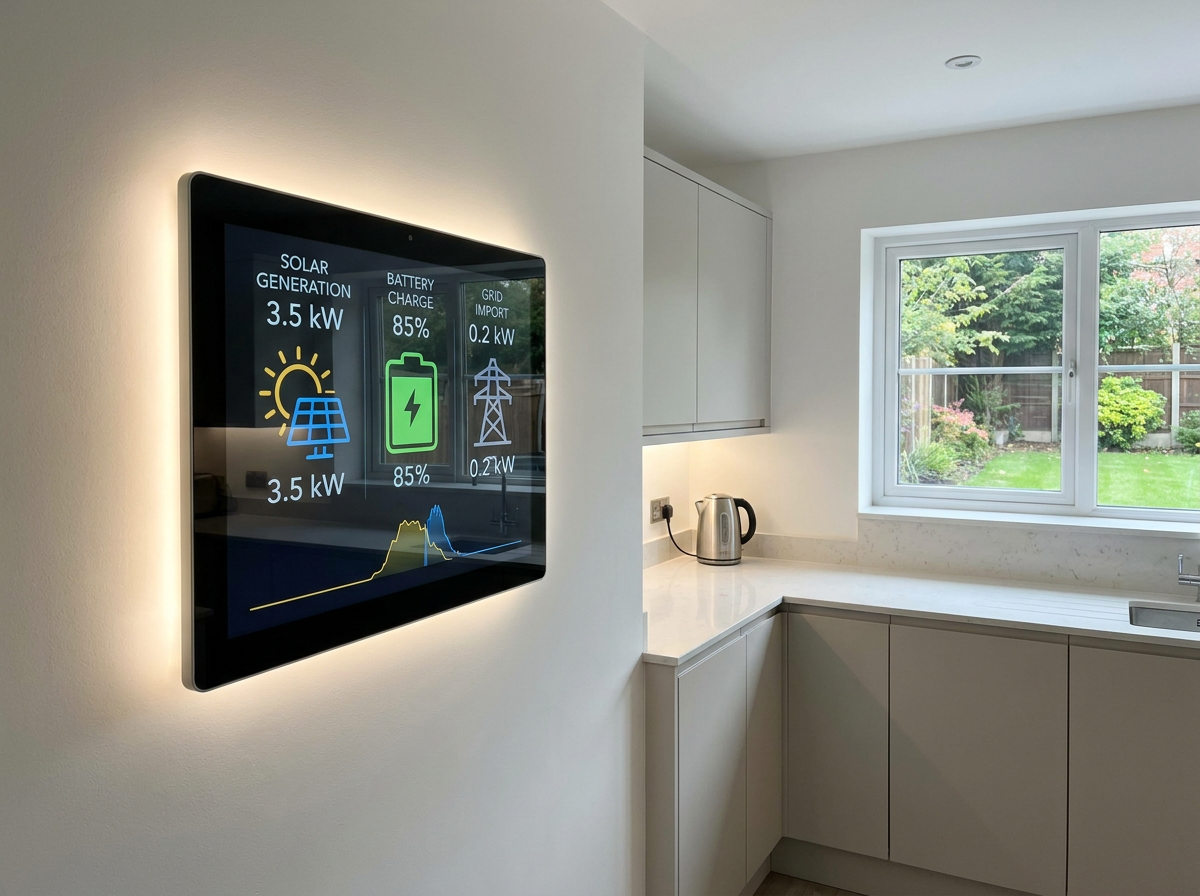
For many UK homes, this is already a reality — and it is becoming one of the most effective ways to reduce electricity costs. It does not require specialist knowledge, constant attention, or significant lifestyle changes. The right combination of technology and tariff can do most of the work automatically, leaving you to benefit without thinking about it daily.
The premise is straightforward: electricity is not a single fixed price. The cost of the power running into your home changes throughout the day and night, sometimes dramatically. Households that understand this and act on it — whether through solar panels, battery storage, a smart tariff, or all three — can shift a meaningful portion of their electricity consumption from expensive periods to cheap ones. This guide explains how that works in practice.
Why Electricity Prices Change
The electricity grid operates in real time. At every moment, the amount of power being generated must match the amount being used. When demand is low and supply is plentiful, electricity is cheap. When demand spikes and generators are working hard to keep up, it becomes expensive. Demand follows a remarkably predictable pattern across the day.
Overnight (~11pm–6am)
CheapestMost of the country is asleep. Demand falls to its lowest point. Wholesale electricity prices follow.
Morning peak (6am–9am)
ExpensiveThe country wakes up — kettles, showers, heating. Demand rises sharply and so does the cost.
Daytime (9am–4pm)
ModerateBusinesses operating, but the sharp residential spike has passed. Prices settle to a mid-range.
Evening peak (4pm–9pm)
Most ExpensiveThe most expensive window. Cooking, heating, and appliances across millions of homes at once.
The role of renewable energy
Wind turbines and solar farms do not generate electricity on demand — they generate it when the wind blows and the sun shines. On days of high renewable output coinciding with low demand (a windy Sunday night, for example), wholesale electricity prices can fall significantly. As the UK's renewable capacity grows, this variability increases — creating genuine financial opportunities for households equipped to respond.
Smart meters and time-of-use tariffs
A smart meter records your electricity consumption in half-hour intervals and communicates that data back to your supplier automatically. This means suppliers can now offer tariffs where the price you pay varies depending on the time of day — reflecting the wholesale price pattern above. These are called time-of-use tariffs. They typically feature cheap overnight windows (off-peak periods) and higher rates during morning and evening peaks. A smart meter is generally required to access them.
The Four Parts of a Smart Energy Home
Smart energy homes do not rely on a single technology. They combine several elements that work together, each reinforcing the others.
1. Solar Panels
Solar panels generate electricity from daylight — not just bright sunshine. They produce power throughout the year, with output varying considerably between summer and winter. During daylight hours, a solar installation can cover some or all of your home's electricity needs directly, reducing the amount you import from the grid. In summer, panels often generate more electricity than the home needs in the middle of the day, creating surplus energy that can be stored or exported.
Combined with battery storage, solar can reduce both daytime and evening imports — surplus generation from the day is stored and used after dark. For homes considering smart energy, solar is a natural starting point: it introduces the concept of generating and managing your own electricity, and it pairs extremely well with the other technologies here.
Find out more about solar panel installation2. Battery Storage
A home battery storage system stores electrical energy and releases it when you need it. It works in both directions: absorbing excess electricity (from solar panels or from the grid) and discharging it back into your home on demand. This is where the concept of buying electricity when it's cheap becomes most tangible.
A battery does not require solar panels to be useful. On an appropriate time-of-use tariff, it can charge from the grid during cheap overnight hours — buying electricity at the lowest available rate — and discharge during expensive morning and evening peaks. This is sometimes called grid arbitrage: buying low, using high.
The concept of self-consumption is central here. Every unit of electricity you use from your own battery — whether charged from solar or cheap overnight grid electricity — is a unit you did not buy at a higher rate. Battery storage also increases a degree of energy independence and, for some configurations, can provide backup power during a grid outage.
Find out more about battery storage options3. Smart Tariffs
The technology is only part of the picture. The tariff you are on determines how much financial benefit you actually capture. A smart tariff — specifically a time-of-use tariff — is what makes the price difference between cheap and expensive electricity periods real and accessible. Without a tariff that prices these windows differently, there is no financial incentive to shift consumption or charge a battery overnight.
Smart tariffs come in several forms, but most share a common structure: lower unit rates during defined off-peak periods (typically overnight) and higher unit rates at other times. Some include multiple cheap windows spread across the day. Some respond dynamically to wholesale market conditions. The specifics vary by supplier and product.
Choosing the right tariff is important because the benefit of battery storage and solar depends partly on the gap between cheap and expensive rates — a larger gap means larger potential savings. It is also worth noting that you are generally not locked to a specific supplier when you install solar or battery storage.
Read our guide to Octopus Energy tariffs in practice4. Smart Controls and Energy Management
The final element is what brings everything together: the software and controls that automate the decision-making. Modern battery systems, hybrid inverters, and energy management platforms can monitor tariff pricing in real time, forecast solar generation from weather data, and track household consumption patterns — adjusting automatically.
- ✓The battery charges from the grid during the cheapest overnight window without any action from you
- ✓Surplus solar generation is automatically directed into the battery during the day
- ✓The battery discharges when grid prices are high, reducing your peak imports
- ✓If you have an EV with a smart charger, it can be scheduled into the same cheap overnight window
- ✓If you have a heat pump, its operation can be timed to coincide with off-peak periods where possible
Once set up and configured to your preferences and tariff, most of this happens automatically. You set the targets and boundaries — the system handles the execution. This automation is what makes the smart energy model practical for ordinary households.
A Typical Day in a Smart Energy Home
The following timeline illustrates how a smart energy home might operate across a 24-hour period. It is deliberately illustrative — actual timings, output levels, and savings depend on the specific tariff, system size, season, and household usage. But it gives a sense of how the different elements interact in practice.
The battery charges from the grid at the off-peak rate — the cheapest electricity of the day. The system fills the battery to a defined level before morning. No action required from the household.
Kettle, shower, lights. Rather than drawing from the grid at the expensive morning rate, the home runs from the battery charged overnight. The energy for this morning routine was bought at off-peak prices hours earlier.
As daylight increases, the solar panels begin generating. The home runs partly on solar, reducing battery draw and keeping the battery level higher for later in the day.
On a reasonable day, solar output is at or near its maximum for the season. The home runs substantially on solar. Any surplus beyond immediate consumption is directed into the battery to top it up.
If the battery reaches full charge and solar continues, surplus electricity is exported to the grid under the Smart Export Guarantee (SEG). Filling the battery first is always the priority.
As the afternoon progresses, solar output falls. The battery begins supplementing the home's supply. Grid prices are beginning to rise toward the evening peak.
The most expensive window on most time-of-use tariffs. The home runs from the battery rather than the grid. Depending on system size and household consumption, the expensive peak may be largely or entirely avoided.
The battery is at a lower state of charge. The system waits for the next off-peak window to open and will charge accordingly. The cycle begins again.
This cycle — charge cheap, generate free, use smart — repeats each day, with the balance between grid charging and solar generation shifting with the seasons. In summer, solar dominates. In winter, grid charging at off-peak rates becomes more important as solar output falls.
Is Solar Essential?
The honest answer is no. A battery-only system, on the right time-of-use tariff, can still produce a worthwhile reduction in electricity bills. It charges at off-peak rates and discharges during expensive periods. For a household with high electricity consumption during peak periods — particularly in the evenings — a battery alone can shift a significant portion of that consumption to cheaper overnight power.
Solar adds a second source of low-cost electricity on top of the grid arbitrage. It reduces daytime imports, provides surplus energy to fill the battery further, and extends the period of self-sufficiency. For most homes, the combination of solar and battery delivers the strongest results.
However, not every property is suitable for solar. A heavily shaded roof, certain listed buildings, and difficult roof orientations all present challenges. This is why proper assessment matters. The right combination of technologies depends on the individual property — which is why the starting point is always a proper assessment.
Battery only
Charges from cheap overnight grid; discharges at peak. Good starting point for properties without solar potential.
Solar only
Reduces daytime imports; generates export income. Best value when combined with a battery.
Solar + battery
The strongest combination for most homes. Maximises self-consumption and bill reduction.
Adding an Electric Vehicle
For households with an electric vehicle, electricity costs take on an additional dimension. A typical EV may need 15–25 kWh or more to recharge from a low state, depending on the model and how far it has been driven. At peak grid rates, this is not an insignificant cost. But this is also where smart energy makes one of its most visible impacts.
A smart EV charger can be scheduled to charge the vehicle during the cheap overnight window on a time-of-use tariff. Instead of plugging in and charging immediately at whatever rate applies, the charger waits for the off-peak window to open and then charges the vehicle at the lowest available price. For high-mileage drivers, this alone can represent a meaningful annual saving.
For homes with solar panels, there is an additional opportunity: charge the car during peak solar generation, using electricity that is effectively free rather than purchased from the grid. Combined with battery storage, cheap overnight electricity fills both the home battery and the car — every element of the system contributes to reducing the cost of powering both home and vehicle.
The choice of EV charger matters. Not all chargers are equally capable of smart scheduling, integration with battery systems, or compatibility with specific tariffs. Getting this right at installation — rather than retrofitting a smarter solution later — is worth considering from the outset.
Find out more about EV charger installationAdding a Heat Pump
Heat pumps are highly efficient heating systems that use electricity to move heat rather than generate it, delivering significantly more heat energy per unit of electricity than a conventional resistance heater. That efficiency is a genuine advantage — but it also means that a heat pump household has a larger electricity demand, which makes the question of when that electricity is purchased more financially significant.
Heat pumps are more flexible in their operation than many homeowners realise. A well-insulated home retains heat for several hours after the heating system stops running. This means a heat pump does not need to run continuously through the expensive evening peak. It can pre-heat the property during a cheap off-peak period and then allow the home to coast on that stored heat through the most expensive hours.
Add solar and battery storage to a heat pump household and the synergies multiply: surplus solar generation can power the heat pump directly during the day, battery storage can smooth out peak consumption, and intelligent controls can co-ordinate all three to minimise the amount of expensive grid electricity the home requires.
Common Myths About Smart Energy
“Solar only works in summer.”
Solar panels generate electricity year-round. They respond to daylight, not temperature or direct sunshine. In the UK, panels typically produce roughly 25–35% of their peak summer output during December and January — still a meaningful reduction in imported electricity in every month of the year.
“Battery storage is only useful if you have solar.”
A battery system with no solar at all can deliver savings on an appropriate time-of-use tariff, simply by charging at cheap overnight rates and discharging during expensive peak periods. Solar amplifies the benefit by adding a second source of low-cost electricity, but it is not a prerequisite.
“Smart tariffs are too complicated to manage.”
The complexity of smart tariffs is almost entirely handled by the energy management system, not by the homeowner. Once configured at installation, it tracks tariff pricing, schedules battery charging and discharging, and adjusts automatically. Most people find that after the initial setup, they rarely think about it at all.
“You have to change your lifestyle.”
You do not need to rearrange your daily routine around electricity prices. Smart controls and battery storage are designed to remove that requirement. You run appliances when it suits you — the system absorbs and manages the cost implications in the background.
“It's not worth it in a small home.”
Smaller homes may use less electricity in absolute terms, meaning gross savings are likely smaller than for a large property. But the proportional impact on the household's bill can still be significant. A 25–30% reduction in electricity costs is meaningful regardless of the starting figure.
“You have to manually control everything.”
Modern energy management systems are designed to operate autonomously once configured. You set your preferences — charge targets, priorities, thresholds — and the system handles execution. Some homeowners enjoy reviewing their energy dashboard; others never look at it after setup. Either approach works.
Frequently Asked Questions
Can I buy electricity at night and use it during the day?
Yes. This is one of the central principles of a smart battery storage system. On a time-of-use tariff with a cheap overnight window, the battery charges during that period and discharges during the day and evening. The electricity you are using during the day was purchased at night, at a lower rate. The battery is the storage mechanism that makes this possible.
Do I need solar panels to benefit from a battery?
No. A battery can deliver savings without solar, purely through the difference between off-peak and peak electricity rates. It charges at cheap overnight rates and discharges during expensive periods. Solar amplifies the benefit by adding a source of effectively free electricity during the day, but it is not a prerequisite. Whether a battery makes sense without solar depends on your electricity consumption, your current tariff, and the financial case for the specific system.
Do I need a battery to benefit from solar?
No. Solar panels reduce your daytime electricity imports and can generate surplus electricity for export, regardless of whether you have a battery. However, without a battery, any surplus solar generation your home cannot use in real time is either exported at the prevailing export rate or wasted. A battery allows you to store that surplus for use after dark, significantly increasing the proportion of your home's electricity consumption that comes from your own generation.
Will this work during winter?
Yes, though the balance shifts. In winter, solar generation is lower, so the contribution from panels is reduced. Battery charging from the overnight grid window becomes more important. A system sized with year-round performance in mind will still deliver meaningful savings in winter — the source of cheap electricity shifts from solar to the off-peak grid window, but the principle is the same.
Can I keep my existing electricity supplier?
This depends on whether your current supplier offers a suitable time-of-use tariff. If they do, you may not need to switch. If they do not, you will need to move to a supplier that offers the kind of off-peak pricing that makes the battery system most effective. The battery and solar hardware are supplier-agnostic — you can switch suppliers in the future without any changes to the installed system.
Do I need a smart meter?
Yes, for most time-of-use tariffs. Smart meters record your consumption in half-hour intervals, which is what allows a supplier to apply different rates at different times of day. Without a smart meter, the tariff cannot distinguish between peak and off-peak consumption. If you do not have one, installation is normally free and your supplier is obligated to offer you one.
Can everything happen automatically?
Largely, yes. Modern battery systems and energy management platforms are designed to operate without daily intervention. Once configured, the system monitors tariff windows, forecast solar output, and household consumption patterns, and adjusts battery charging and discharging accordingly. You can interact with it as much or as little as you like.
Is it worth it if I work from home?
Working from home generally favours a smart energy system. Your daytime electricity consumption is higher than it would be for a household that is empty during working hours, which means there is more demand to meet from solar generation or battery discharge. You are also more likely to benefit from running appliances during solar peak periods. A home worker tends to have a flatter, more consistent consumption profile throughout the day, which energy management systems handle well.
Can I charge my EV overnight on cheap electricity?
Yes, and for many households this is one of the most financially compelling applications of a smart tariff. A smart EV charger can be scheduled to charge the vehicle during the cheap overnight window, effectively buying the fuel for your car at off-peak electricity rates. For high-mileage drivers, the difference between charging at peak and off-peak rates can represent a substantial annual saving.
What happens during a power cut?
This depends on the specific battery system and how it has been configured. Some battery installations include functionality to disconnect from the grid and power the home independently during an outage — often called backup or islanding mode. Others do not support this by default or require additional hardware. This is an important question to raise when specifying a system, particularly if resilience is a priority. Not all batteries offer backup capability, and those that do may have limitations on the load they can support.
How much money could I save?
Honestly, it depends — and any figure given without knowing your specific situation should be treated with caution. The variables include your current electricity consumption and how it is distributed across the day, the tariff you move to, the size of the solar array and battery, your roof's orientation and shading, and your usage patterns. The starting point for any realistic projection is a proper assessment of your specific home and usage.
How long does a battery last?
Most modern home battery systems are designed for a service life of ten years or more under normal use, with many manufacturers offering warranties of at least ten years. Battery capacity reduces gradually over time — most systems are specified to retain a defined minimum percentage of their original capacity at the end of the warranty period. In practice, a well-maintained system often performs well beyond its warranty term.
Can I add a battery to existing solar panels?
In most cases, yes. A battery can be retrofitted to an existing solar installation, though the process and equipment required depend on the type of inverter already installed and the battery system being added. Some configurations are straightforward; others may require the existing inverter to be replaced with a hybrid inverter capable of managing both solar and battery. This is worth assessing on a case-by-case basis.
Does the system work with any electricity supplier?
The hardware — solar panels, battery, inverter, EV charger — is not tied to a specific electricity supplier. You can switch suppliers without changing your equipment. What does matter is choosing a supplier that offers a time-of-use tariff compatible with your system's energy management capabilities. Not every supplier offers suitable tariffs, so selecting the right one is part of getting the system working effectively.
The Cheapest Electricity Is the Electricity You Buy at the Right Time
The cheapest electricity is not always the electricity you generate — it is the electricity you buy at the right time and use intelligently. The combination of solar, battery storage, smart tariffs, and smart controls creates a home energy system that works for the household rather than against it. It turns the variability of electricity pricing from a hidden cost into a manageable and, in many cases, a financial advantage.
Not every home needs every element. The right system for a large south-facing property in Sussex is not the same as the right system for a flat-roofed terrace with no solar potential. Getting it right requires understanding the specific property, the household's usage, and the financial case for each component.
Every home uses energy differently. If you'd like to find out how a smart energy system could reduce your electricity bills, contact Omni3 for impartial advice. We'll help you understand the options and design a solution that works for your home, your lifestyle and your budget.
Get a Free ConsultationRelated pages
For more guides on smart energy, tariffs, and the technology behind them, subscribe to the Smart Energy Bulletin — Omni3's monthly newsletter covering practical topics, industry updates, and real-world installation insights for homeowners and businesses across Sussex and the South East.