
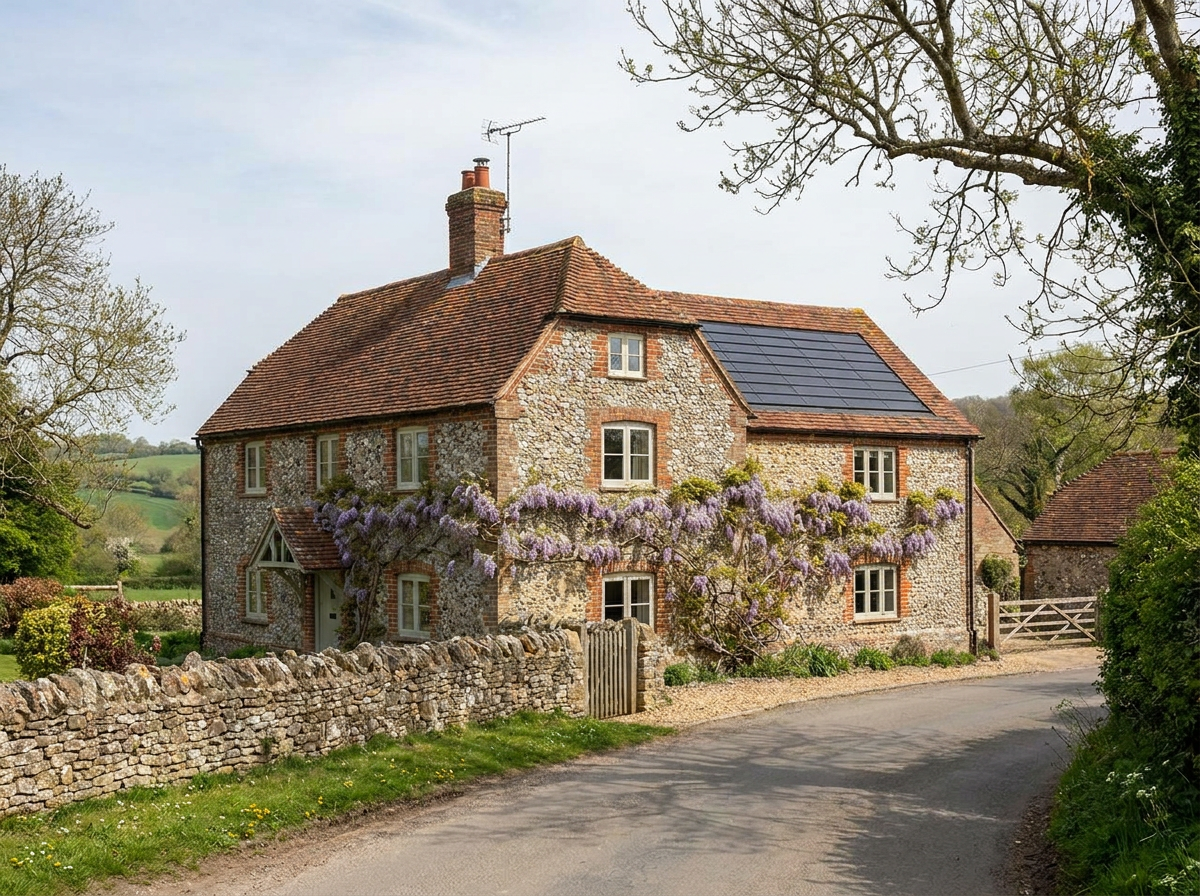
Omni3 does not provide planning advice or legal planning opinions. This article is for general information only. Planning rules can change. Homeowners should confirm the current position with the relevant planning authority before proceeding. Last reviewed: August 2026.
Listed building grades explained
In England, listed buildings are designated at three grades:
- –Grade II — the most common category, covering buildings of special interest. Around 92% of all listed buildings are Grade II.
- –Grade II* — buildings of more than special interest.
- –Grade I — buildings of exceptional interest, making up around 2% of all listed buildings.
The grade affects the level of scrutiny an application receives, but it does not change the legal requirement: all grades of listed buildings require planning permission and listed building consent for solar panel installation. There is no grade at which solar panels become permitted development.
Why two consents are always required
Solar panels on a listed building are not permitted development regardless of where on the building they are positioned. Two separate applications must be made and approved before any work can begin: full planning permission and listed building consent. Neither substitutes for the other, and both must be granted before work begins.
Full planning permission assesses the impact of the installation on the character and appearance of the area, the setting of the listed building, and any applicable planning policies.
Listed building consent assesses the impact on the building itself: its architectural and historic significance, its fabric and structure, and the reversibility of the proposed works.
What listed building consent actually covers
Listed building consent is not simply a tick-box exercise. The planning authority will assess whether the proposed works affect the character of the listed building as a building of special architectural or historic interest. In practice, this means scrutiny of:
- –Penetrations through historic fabric — fixings, cabling routes, and conduits that pass through historic walls, roofs, or floors.
- –Impact on significant features — near historic roof materials, decorative stonework, lead valleys, or other character-defining features.
- –Reversibility — evidence that the installation can be removed without leaving lasting damage to the fabric.
- –Visual impact on the building itself — the impact on the appearance and legibility of the building's historic form.
Historic England has published guidance on solar panels on historic buildings. This is a useful reference for understanding the considerations that will apply.
Design approaches that can support an application
Applications for listed buildings are more likely to succeed where the design has clearly responded to the specific character of the building. Relevant considerations include:
- –Position — rear elevations, secondary roofs, wings, or outbuildings that are less prominent are generally preferred.
- –Mounting system — in-roof systems, which sit flush with the roof surface, are generally considered less visually intrusive.
- –Fixings and reversibility — demonstrating that fixings minimise damage to historic materials and that the installation can be fully removed.
- –Panel specification — darker frames, low-reflectance glass, and panels that reduce contrast with traditional roofing materials are generally preferred.
Outbuildings: check carefully
If the main house is listed, a separate outbuilding on the same property may or may not be subject to the same restrictions. An outbuilding that falls within the curtilage of the listed building and was built before 1 July 1948 is likely to be a curtilage listed building, carrying the same consent requirements as the main listed structure. A modern outbuilding built after 1948 is less likely to be curtilage listed, but the position depends on the specific circumstances. Checking with the planning authority before assuming a modern garage or shed is outside the listing is always advisable.
Early conversation with the conservation officer
For listed buildings, the case for pre-application advice is particularly strong. The conservation officer is the key contact — they can advise on the authority's general approach, indicate whether a specific design concept is likely to be viable, and flag any particular concerns before a formal application is prepared.
How Omni3 can help
Omni3 works with owners of listed buildings across West Sussex and the South East. We can provide technical drawings and specifications of proposed installations — including mounting system, panel positions, fixing details, and cable routes — that are typically required to support a listed building consent application. We can discuss practical options for system design and carry out the installation once consent is in place. Omni3 does not provide planning advice or listed building consent applications. Contact us to discuss a project involving a listed building.
Frequently Asked Questions
Can you ever get planning permission for solar on a listed building?
Yes. The requirement for planning permission and listed building consent does not mean those consents will be refused. Many listed buildings have had solar panels successfully installed, particularly where the design has been carefully considered and the installation is positioned on a less prominent or visible part of the building. The outcome will depend on the specific building, its grade, its setting, and the quality of the application.
What is listed building consent?
Listed building consent is a separate legal consent, distinct from planning permission, required for any works that would affect the character of a listed building as a building of special architectural or historic interest. It is required for internal works as well as external ones, and for any alterations that affect the structure or fabric of the listed building. Applications are made to the local planning authority.
Does the grade of listing matter?
All listed buildings require the same consents — planning permission and listed building consent — regardless of grade. However, the threshold for what constitutes unacceptable harm is applied with greater scrutiny as the grade increases. For Grade I and Grade II* buildings, the bar for demonstrating that harm is minimised is correspondingly more demanding. Pre-application advice is particularly important for these buildings.
Can I put solar on an outbuilding attached to a listed farmhouse?
Possibly, but the answer depends on whether the outbuilding is itself listed or is a curtilage listed building. An outbuilding that was built before 1 July 1948 and sits within the curtilage of the listed farmhouse is likely to be curtilage listed, and the same consent requirements apply. A modern outbuilding built after 1948 may not be curtilage listed, but this is not always clear-cut. Checking with the planning authority before assuming the outbuilding is outside the listing is strongly advisable.
What information does a listed building consent application typically need?
A listed building consent application for solar panels typically includes: a heritage statement assessing the significance of the building and how the proposed installation affects it; detailed drawings showing the panel positions, mounting method, fixing details, and cabling routes; photographs of the building and the proposed installation area; technical specifications for the panels and mounting system; and a statement of how the installation can be reversed without damage.