
Omni3 does not provide planning advice or legal planning opinions. This article is for general information only. Planning rules can change. Homeowners should confirm the current position with the relevant planning authority before proceeding. Last reviewed: August 2026.
What a conservation area is
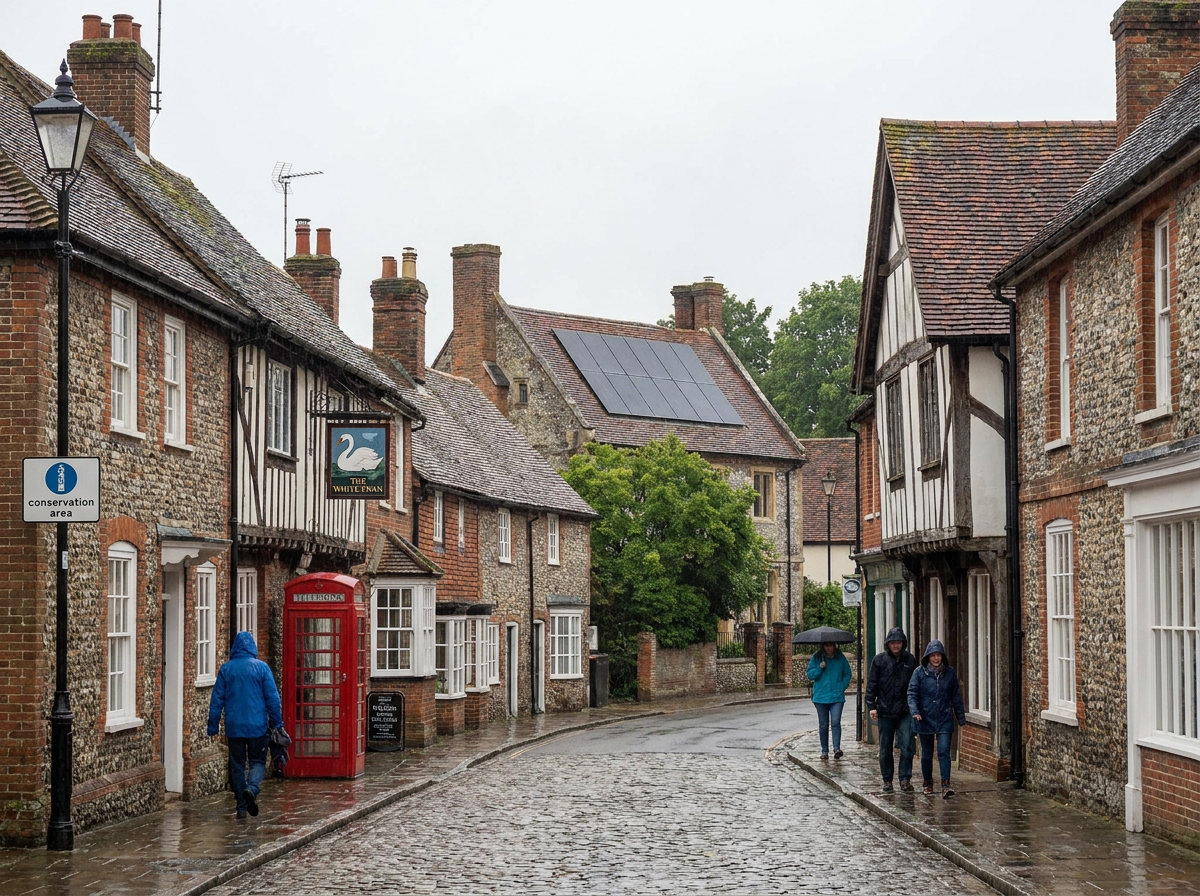
A conservation area is a designation applied by a local planning authority to an area it considers to have special architectural or historic interest. Designation does not mean every individual building is protected — most buildings in a conservation area are ordinary homes, not listed structures. What it does mean is that the collective character and appearance of the area is considered worthy of preservation, and planning rules are adjusted to protect that character.
A conservation area is not the same as a listed building designation. Conservation area designation applies to a geographical area and affects what can be done without planning permission within it. Both can apply simultaneously — a listed building within a conservation area is subject to both sets of rules — but they are distinct.
Where the restriction actually applies
The restriction on solar panels in a conservation area is more targeted than many people assume. It does not mean planning permission is automatically required for all solar panels on all properties within the boundary.
Under Article 2(3), solar panels on the principal elevation of a dwelling are not permitted development where that elevation faces and is visible from a highway. Planning permission is required for those panels. Panels on rear elevations, side elevations, or other parts of the property that do not constitute the principal elevation fronting a highway may still fall within permitted development, provided all the other Class A conditions are met.
This means that for a typical Victorian terraced or semi-detached house in a conservation area, a rear-slope installation may well proceed without planning permission, while a front-elevation installation would require one.
Flat roofs
For flat-roofed properties within Article 2(3) land — which includes all conservation areas — prior approval is required for Class A solar installations. Prior approval is a lighter process than full planning permission: you notify the planning authority and they have a defined period to raise objections. However, it is still a formal step that needs to be completed before work starts.
Conservation area character appraisals
Most conservation areas have a character appraisal document, prepared by the local planning authority, which describes what makes the area significant. These are usually available on the authority's website. Reading the character appraisal before planning a solar installation can give useful background — it will help you understand the context in which any application would be assessed.
Panel colour, layout and positioning
Where a planning application is required, visual impact will be a central consideration. In practice:
- –Panels positioned on less prominent slopes are more likely to be acceptable than those visible from the street.
- –Darker frames and less reflective finishes tend to be preferred where traditional roofing materials form the character of the area.
- –In-roof systems (where panels sit flush with the roof) may be considered less visually obtrusive than conventional on-roof panels.
- –Minimising the number of panels visible from public viewpoints reduces visual impact.
These are design considerations, not absolute rules. The final assessment is a matter of planning judgment. See our visual impact design guide for more detail.
Contact the conservation officer informally first
For properties within a conservation area where the planning position is unclear, an informal approach to the local planning authority's conservation officer before submitting a formal application can be worthwhile. An informal telephone or email enquiry is often possible for simpler queries and can provide a useful steer without committing you to anything.
The important principle is: do not install first and seek permission later. Retrospective planning applications are possible, but an installation that is refused retrospective consent — and has to be removed — is significantly more costly than one that went through the proper process from the start.
How Omni3 can help
Omni3 installs solar panels across West Sussex and the South East, including in conservation areas and other designated locations. We can advise on system design options that minimise visual impact, provide technical drawings and specifications for planning submissions, and carry out installations once the planning position is established. We do not provide planning advice. Contact us to discuss a project.
Frequently Asked Questions
Do I need planning permission for solar in a conservation area?
It depends on where the panels are positioned. Panels on the principal elevation of a dwelling fronting a highway are not permitted development within a conservation area and require planning permission. Panels on rear or side elevations that do not front a highway may still fall within permitted development, subject to standard conditions. Flat-roofed properties require prior approval regardless of elevation. Listed buildings within conservation areas require both planning permission and listed building consent for any solar installation.
Can I put panels on the back of my house in a conservation area?
In many cases, yes. Panels on rear elevations that do not constitute the principal elevation of the dwelling fronting a highway may fall within Class A permitted development, provided the standard conditions are met — no more than 200mm protrusion, not exceeding the highest point of the roof, and any other applicable Class A requirements. Confirming the specific position with your local planning authority is advisable if there is any doubt.
Is my entire street affected if it's in a conservation area?
Yes, if the conservation area boundary includes your street. Conservation area designation applies to all properties within the designated boundary. The specific restriction on solar — that principal elevation panels fronting a highway are not permitted development — applies uniformly to all dwellings in Article 2(3) land. You can check whether your property is within a conservation area using your local planning authority's mapping tools.
Will planners automatically object to solar in a conservation area?
No. Planning authorities are not required to refuse applications for solar panels in conservation areas, and many applications succeed. The question is whether the installation causes harm to the character and appearance of the area. An application that demonstrates thoughtful siting — rear elevation, sympathetic materials, unobtrusive design — is less likely to be refused than one that ignores the character of the area.
What information helps a conservation area planning application?
A useful application typically includes: a site location plan, existing and proposed elevation drawings showing the panel positions, technical specifications for the panels and mounting system, photographs showing the property in its context, and a brief design statement explaining how the installation has been designed to minimise visual impact and respect the character of the area.