
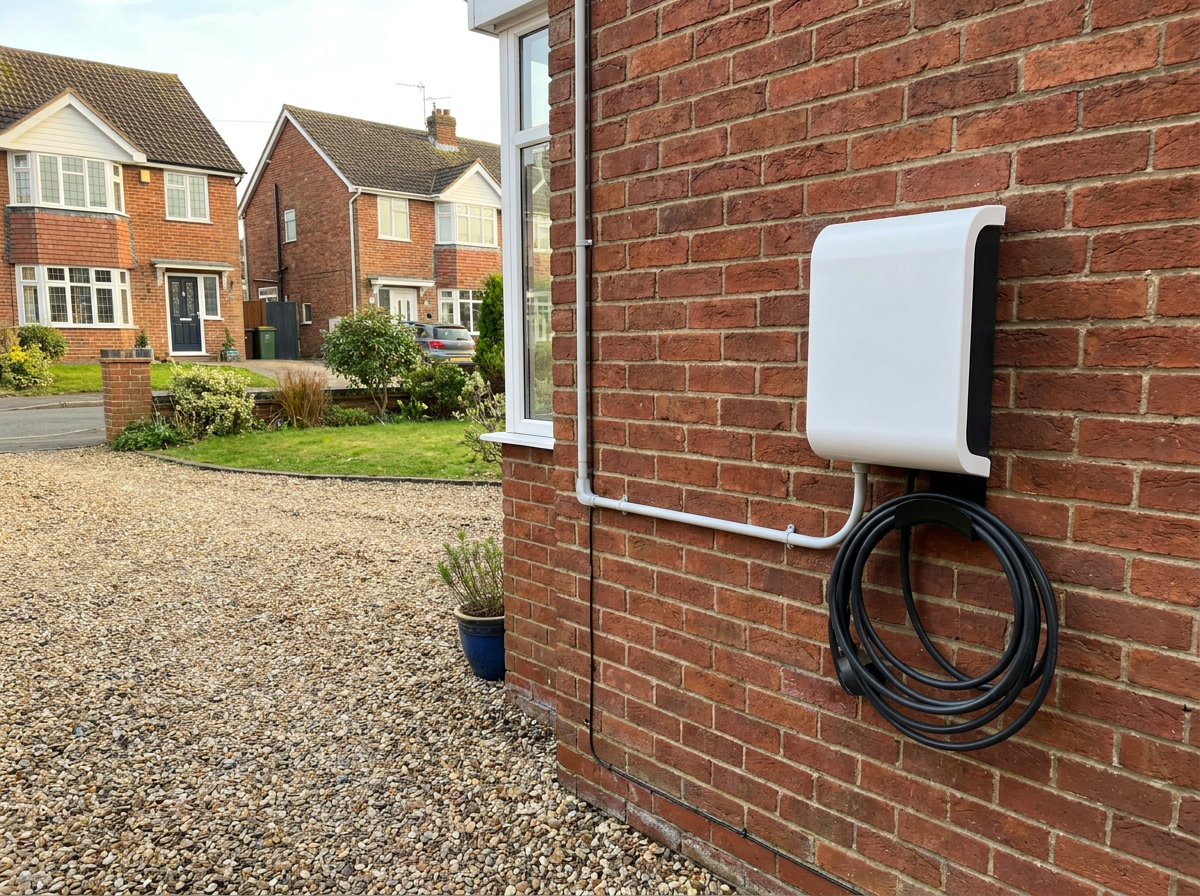
If you are buying an electric vehicle, running a business with a car park, or managing a rental property, there is a good chance you are eligible for a government grant towards your EV charging installation. The Office for Zero Emission Vehicles (OZEV) administers several schemes that can significantly reduce the upfront cost — but the rules have changed several times in recent years and a lot of outdated information is still circulating online.
This guide covers the current state of OZEV grants in 2026, who qualifies, what the process looks like and what you actually need to do to claim.
The Workplace Charging Scheme (WCS)
The Workplace Charging Scheme is the most widely available OZEV grant for businesses and organisations. It covers 75% of the total purchase and installation cost, up to a maximum of £350 per socket. Eligible organisations can apply for up to 40 sockets across all their sites.
Eligible applicants include:
- Registered businesses (any size, any sector)
- Charities
- Public sector organisations, including local authorities and schools
- Small accommodation businesses (B&Bs, hotels, holiday lets)
The charger must be installed at a business premises and must be used for employees or fleet vehicles. It does not need to be exclusively for business use — employee-facing chargers that are also accessible to visitors are eligible.
Example: 5 dual-socket chargers
10 sockets × £350 maximum = £3,500 grant funding. If the total installation cost was £6,000, you would pay £2,500 after the grant.
Residential Grants: Who Still Qualifies?
The Electric Vehicle Homecharge Scheme (EVHS) has been significantly narrowed since it was originally launched. As of 2024, the EVHS is only available to:
- People living in flats (leasehold or owned)
- People living in rented accommodation (houses or flats)
Homeowners living in a house with their own off-street parking are no longer eligible for the EVHS. This is a common source of confusion and disappointment.
If you own your home and want an EV charger, you will pay the full cost of installation — typically £750 to £1,400 for a standard domestic installation depending on the charger specification and cable run required.
Grants for Landlords and Rental Properties
The EV Infrastructure Grant for Residential Car Parks helps landlords and property managers install EV charging infrastructure across multi-unit residential properties. It covers up to 75% of costs for installing the cable and groundwork required to support EV charger sockets, up to £30,000 per application.
For landlords of individual rental properties, the EVHS grant of £350 is available for charger installation at the property — provided the tenant has a plug-in vehicle or has placed an order for one.
How the Application Process Works
OZEV grants are not claimed directly by the customer. Instead, the process works as follows:
- You choose an OZEV-authorised installer. Only approved contractors can submit grant applications. Always confirm your installer is currently approved before committing.
- Your installer checks your eligibility and confirms the right grant scheme for your situation.
- Your installer submits the grant application before or at the time of installation. You do not interact directly with the OZEV portal.
- The grant is deducted from your invoice. You pay the net cost after the grant — you never pay the full amount and wait for a refund.
- OZEV reimburses the installer directly after the application is approved.
What Charger Do You Need?
All grant-funded chargers must be smart chargers — capable of remote access, able to respond to grid signals (demand-side response) and able to display real-time data to the user. In practice, this means virtually all modern dedicated EV chargers from reputable brands (OHME, Hypervolt, Myenergi Zappi, Easee, Indra) will qualify.
Three-pin plug adapters, portable charge cables and non-networked chargers do not qualify for OZEV grants.
If you also have solar panels, a solar-aware charger such as the Myenergi Zappi will allow you to charge your vehicle prioritising solar surplus generation — meaning your fuel cost can be close to zero on sunny days.
Combining Grants With Solar Installation
There is no restriction on combining EV charger grants with solar and battery installation. Both can be installed at the same time by the same contractor, and the OZEV grant applies to the EV charger element regardless.
A solar-integrated EV charger installed alongside a 4 kWp solar system can realistically provide 2,000–3,000 miles of free, solar-generated driving per year — based on typical Sussex irradiance levels and a vehicle consuming around 3.5 miles per kWh.