
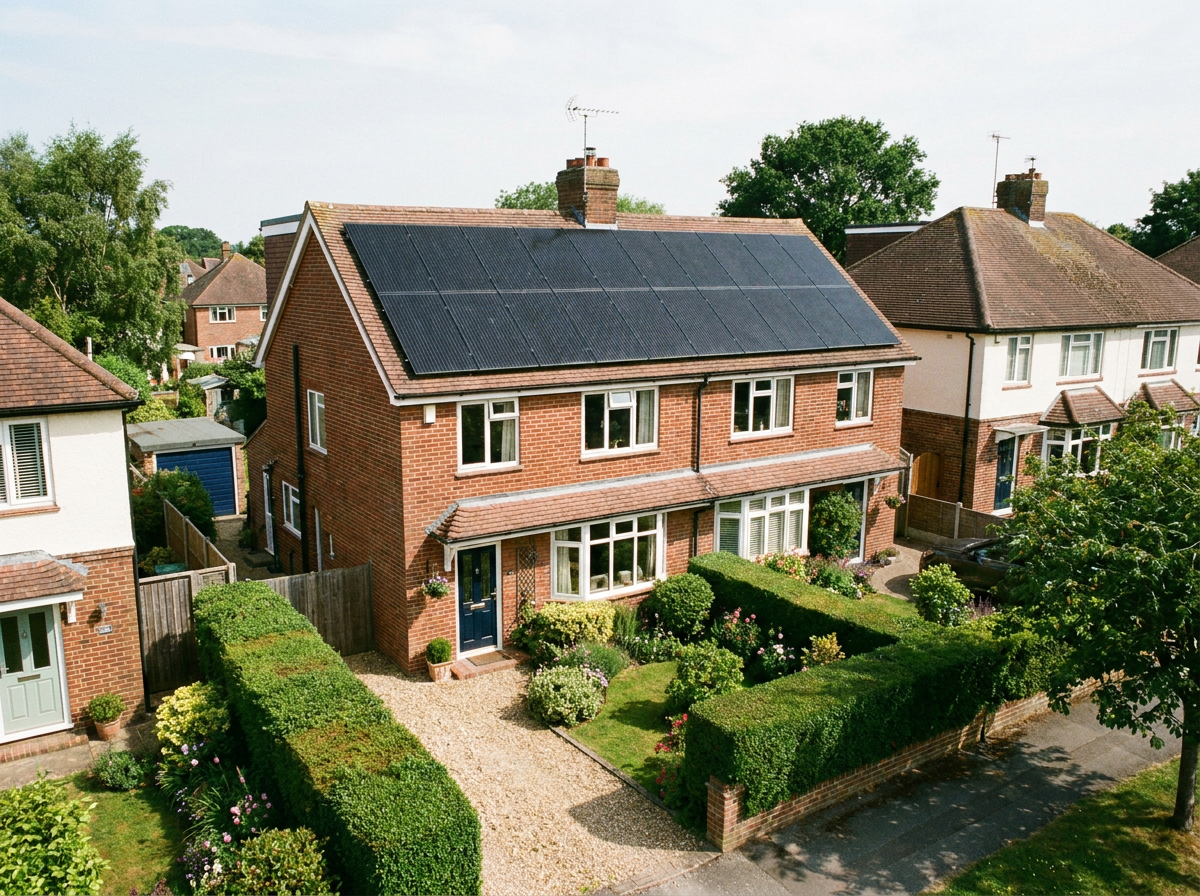
Sussex and Hampshire sit in the sunniest part of the UK. The South East consistently records more annual sunshine hours than Scotland, Wales, the Midlands and most of northern England — and that matters a great deal when you are calculating the return on a solar installation. But does that make solar panels financially worthwhile for homeowners here? The honest answer is: usually yes, but not always in the same way.
How Much Electricity Will Sussex Solar Panels Generate?
Solar generation is measured in kilowatt-hours per kilowatt-peak (kWh/kWp). In the South East, a well-sited south-facing roof with minimal shading will typically generate 1,000 to 1,100 kWh per kWp per year. The UK national average is around 950–1,000 kWh/kWp — so Sussex and Hampshire are consistently above average.
A typical residential installation is 4.2 kWp (10 x 420W panels or 12 x 350W panels). At 1,050 kWh/kWp, that produces approximately 4,400 kWh per year — similar to the annual electricity consumption of an average UK household.
Estimated annual generation (South East UK)
3 kWp
~3,150 kWh
4.2 kWp
~4,400 kWh
6 kWp
~6,300 kWh
What Does That Save You in Money?
The financial return from solar comes from two sources: the electricity you use directly from your panels instead of buying from the grid (self-consumption), and the surplus electricity you export and receive payment for via the Smart Export Guarantee (SEG).
Assuming a grid import rate of 29p/kWh and a SEG export rate of 5.5p/kWh:
- If you self-consume 40% of your generation (no battery, lower daytime occupancy): ~1,760 kWh × 29p = £510 saved. Remaining 2,640 kWh exported: 2,640 × 5.5p = £145 earned. Total: £655/year.
- If you self-consume 70% (with battery or high daytime usage): ~3,080 kWh × 29p = £893 saved. Remaining 1,320 kWh exported: 1,320 × 5.5p = £73 earned. Total: £966/year.
The biggest variable is self-consumption. Households that are at home during the day, have an EV to charge, or add a battery will capture significantly more of what they generate.
How Much Does a Solar System Cost in Sussex?
Installed costs for residential solar systems in the South East in 2026 typically range from:
- 3 kWp system: £4,800 – £6,500
- 4.2 kWp system: £5,800 – £8,000
- 6 kWp system: £7,500 – £10,500
Solar is currently zero-rated for VAT in the UK (as of June 2026), which makes a meaningful difference to the total cost. This applies to both panels and battery storage installed at the same time.
Prices vary depending on the roof type, scaffolding requirements, distance to the consumer unit, panel brand, and inverter specification. A proper survey is always needed to provide an accurate quote.
Typical Payback Period for Sussex Homeowners
Using the figures above:
- Low self-consumption (40%), no battery, 4.2 kWp: £655/year → payback on a £6,800 system = ~10 years
- High self-consumption (70%), with battery: £966/year → payback on a combined solar + battery cost of £11,000 = ~11 years (but better returns long term)
- EV charging from solar added: potential additional £300–£600/year saving on fuel, reducing effective payback to 7–9 years
These are conservative estimates. Energy prices are not falling, and most households will see their savings increase over time as grid electricity continues to become more expensive.
What Affects Whether Solar Is Worth It For You Specifically?
The single biggest factor is how much of the solar electricity you actually use rather than export. Key factors that improve self-consumption:
- Someone is at home during the day
- You have an electric vehicle to charge
- You add battery storage to capture unused afternoon generation
- You run high-consumption appliances (washing machine, dishwasher, hot water cylinder) during peak solar hours
Roof orientation, pitch, and shading also matter significantly. A south-facing, unshaded 35° pitch is ideal. A well-designed system on a southeast-facing roof will still perform very well — but a heavily shaded roof or north-facing installation may not be viable without optimisers or microinverters.
The honest answer for most Sussex homeowners with a suitable roof and reasonable daytime electricity use: solar is worth it. It is one of a small number of home improvements that reliably pays for itself while also reducing carbon emissions. The question is usually less "should I install it" and more "what size system and what combination of battery and EV charger makes the most sense for my usage."