Installing solar panels and a battery storage system is a significant step towards energy independence. But how you manage and schedule that energy once it is installed determines how much you actually save. A well-configured smart energy system — one that responds to tariff pricing, weather forecasts and your household patterns — can add a meaningful financial return on top of the hardware alone.
The Components of a Smart Energy Home
Smart energy management at home requires four things working together:
- A smart meter — providing half-hourly consumption data to your supplier and to your energy management system
- A solar + battery system with a management interface (GivEnergy, Sigenergy, Tesla, SolarEdge etc.)
- A time-of-use tariff — such as Octopus Agile, Octopus Go, E.ON Next Drive or similar
- A monitoring and control platform — either the battery manufacturer's own app or a third-party system that consolidates all devices
An EV charger (particularly a smart one like the Zappi or OHME) is a significant optional extra that substantially increases the benefit of smart management.
Time-of-Use Tariffs: The Financial Engine
Standard electricity tariffs charge a flat rate per kWh regardless of when you use it — currently around 28–34p/kWh for most UK households. Time-of-use (ToU) tariffs charge different rates at different times of day, reflecting the actual cost of electricity on the wholesale market.
The most straightforward example is Octopus Go, which offers a fixed cheap rate (typically 7–9p/kWh) between 11pm and 5am, and a standard rate during the day. A household with a battery can programme it to charge from the grid overnight at the cheap rate and discharge during the evening peak — saving around 20–25p per kWh over those hours.
Octopus Agile takes this further with half-hourly dynamic pricing. Prices vary constantly based on market conditions. During periods of very low grid demand (often 1–5am in winter), prices can drop to 1–3p/kWh. During high-demand periods they can spike to 40–60p/kWh. A well-managed battery charges automatically when prices are cheapest and avoids drawing from the grid when prices peak.
Illustrative daily example (winter day, Octopus Agile)
Battery Scheduling: The Basics
All modern home batteries allow scheduled charging and discharging via an app or web portal. The key settings to configure are:
- Charge time window: Set the battery to charge from the grid during the cheapest overnight hours
- Discharge time window: Set the battery to power your home during peak-price evening hours
- Minimum state of charge: Keep the battery above a minimum level (e.g. 20%) to maintain backup capability
- Solar priority: Ensure the battery charges preferentially from solar during the day rather than waiting for the scheduled overnight window
Some systems (GivEnergy with GivTCP, Sigenergy, Tesla with Powerwall app) allow these schedules to be updated automatically based on Octopus tariff data — the system fetches tomorrow's prices and sets the optimal schedule without manual intervention.
Smart EV Charging
An electric vehicle is by far the largest controllable load in most homes, using 3–5× more energy annually than a washing machine and tumble dryer combined. Controlling when the EV charges is therefore one of the most financially impactful smart energy decisions.
Intelligent Octopus communicates directly with compatible vehicles (Tesla, Ford, Volkswagen, Audi and others) via their manufacturer APIs and schedules overnight charging automatically during the cheapest grid periods — typically at 7–9p/kWh. This requires no physical smart charger; it controls the car's on-board charger directly via the cloud.
A solar-aware charger like the Myenergi Zappi, as described in our EV charging with solar guide, handles the daytime solar diversion. The two approaches are complementary — solar divert during the day, cheap-rate grid top-up overnight.
Monitoring: Seeing the Full Picture
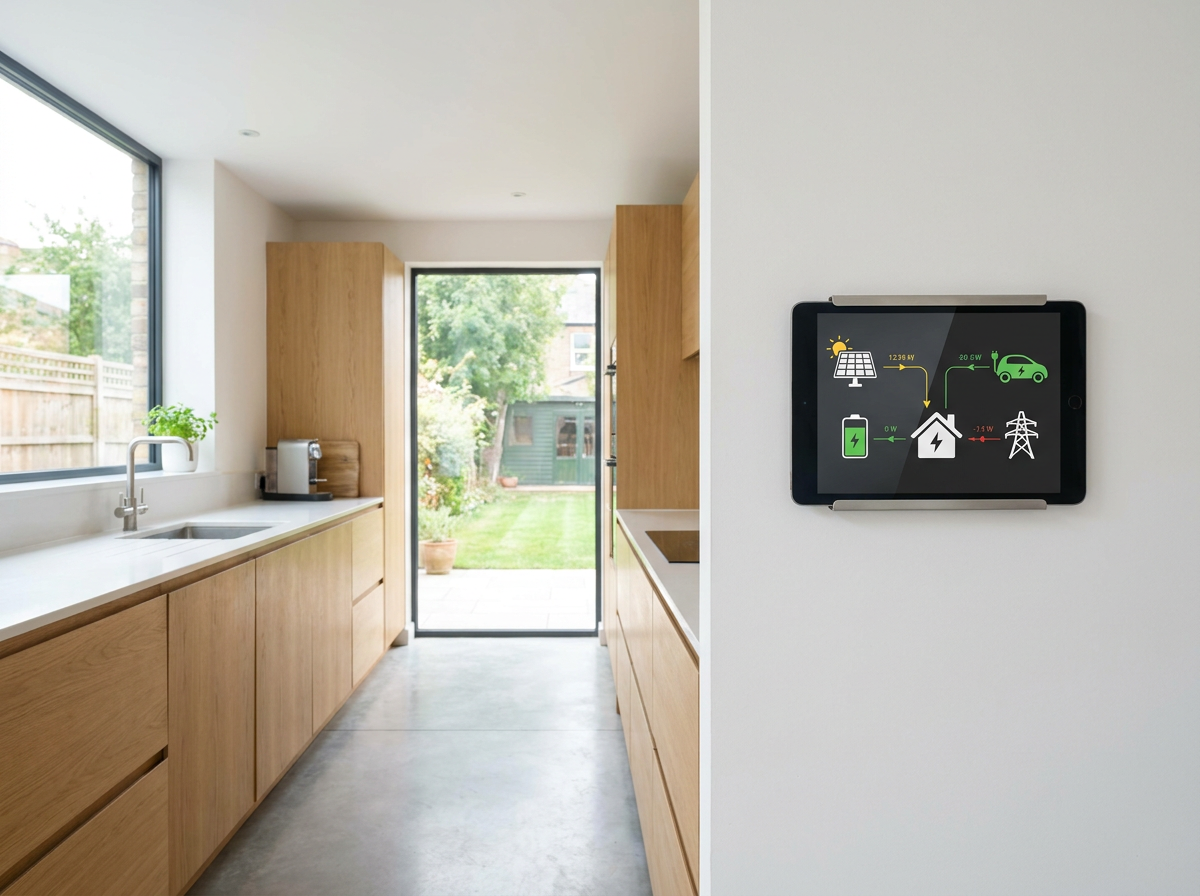
The final piece is visibility. A good monitoring platform shows you — ideally in real time — where your energy is coming from, where it is going, and how your financial position is changing across each day, week and year.
Most battery manufacturers provide their own monitoring apps, but these only show data for their own equipment. A consolidated monitoring platform that brings together solar generation, battery state, household consumption, EV charging and grid import/export in a single view is significantly more useful.
The Omni3 Smart Monitoring platform is designed to do exactly this — providing unified visibility and control regardless of which individual components you have installed.